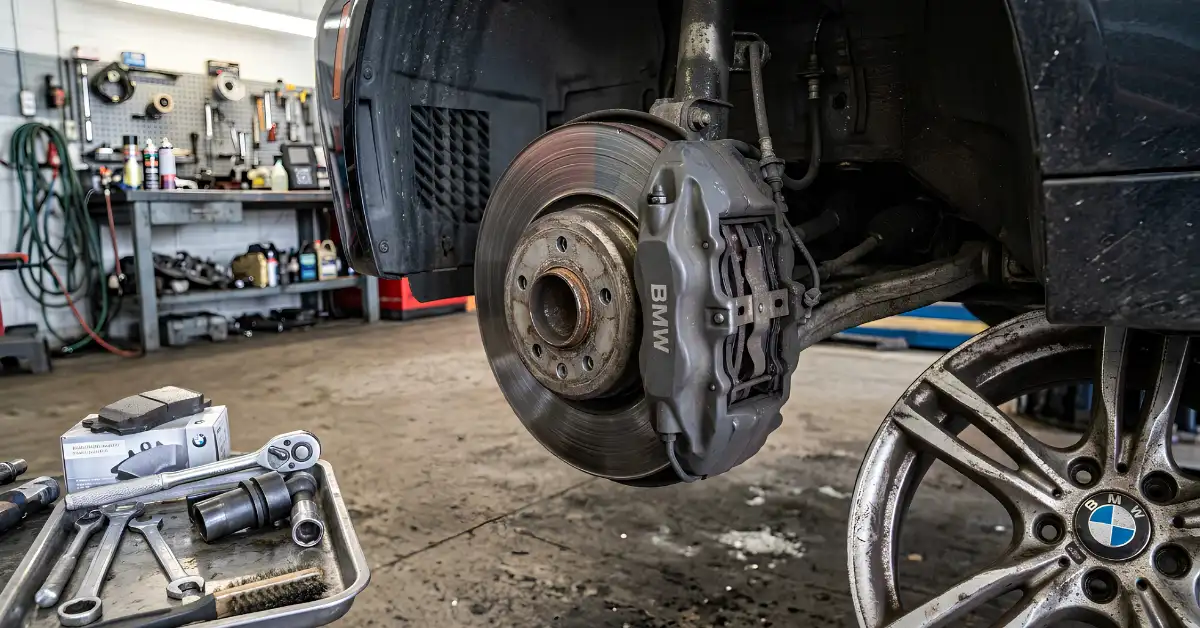
Squealing
A sharp, high-pitched noise under light pedal pressure means the built-in wear tab is touching the rotor face. Most of the usable lining is already gone at this stage.
Get a Free Written Estimate
Line-item pricing before any work begins. Call or message us now.
Call +971 52 731 8779 WhatsApp Us BMW Brake Repair · Musaffah, Abu Dhabi
800 Sayara handles every type of brake job for BMW vehicles across Abu Dhabi. Whether you drive a daily commuter through Mussafah traffic or push an M-series on the expressway, our trained team gives your car the same care and detail you expect from a dealer. We built our garage on that promise, and thousands of repeat visits prove it works.
Catch these warning signs early, and you save yourself from costly damage to rotors, calipers, and fluid lines.
Squealing
A sharp, high-pitched noise under light pedal pressure means the built-in wear tab is touching the rotor face. Most of the usable lining is already gone at this stage.
Grinding
A rough, metallic scraping sound while you slow down means the pad lining is fully gone. The steel backing plate is now cutting into the disc, causing damage that gets worse with every stop.
Vibration
A shake in the steering wheel or pedal at highway speed points to a warped rotor. This happens when the disc heats and cools unevenly over many braking events.
Spongy pedal
A soft pedal that sinks lower than normal before the car slows down usually means air has entered the fluid line, or the fluid itself has absorbed too much moisture.
Warning lamp
The dashboard brake light or iDrive alert turns on when the electronic wear sensor detects that pad thickness has dropped below the factory-set minimum. This sensor only triggers once and cannot reset.
Pulling
The car drifts to one side when you press the pedal. This often comes from uneven lining wear, a stuck caliper slide pin, or dirty fluid in one side of the circuit.
Extended stopping distance
You notice the car takes longer to come to a full stop than it used to. This means the lining has worn too thin to grip the rotor properly and needs prompt replacement.
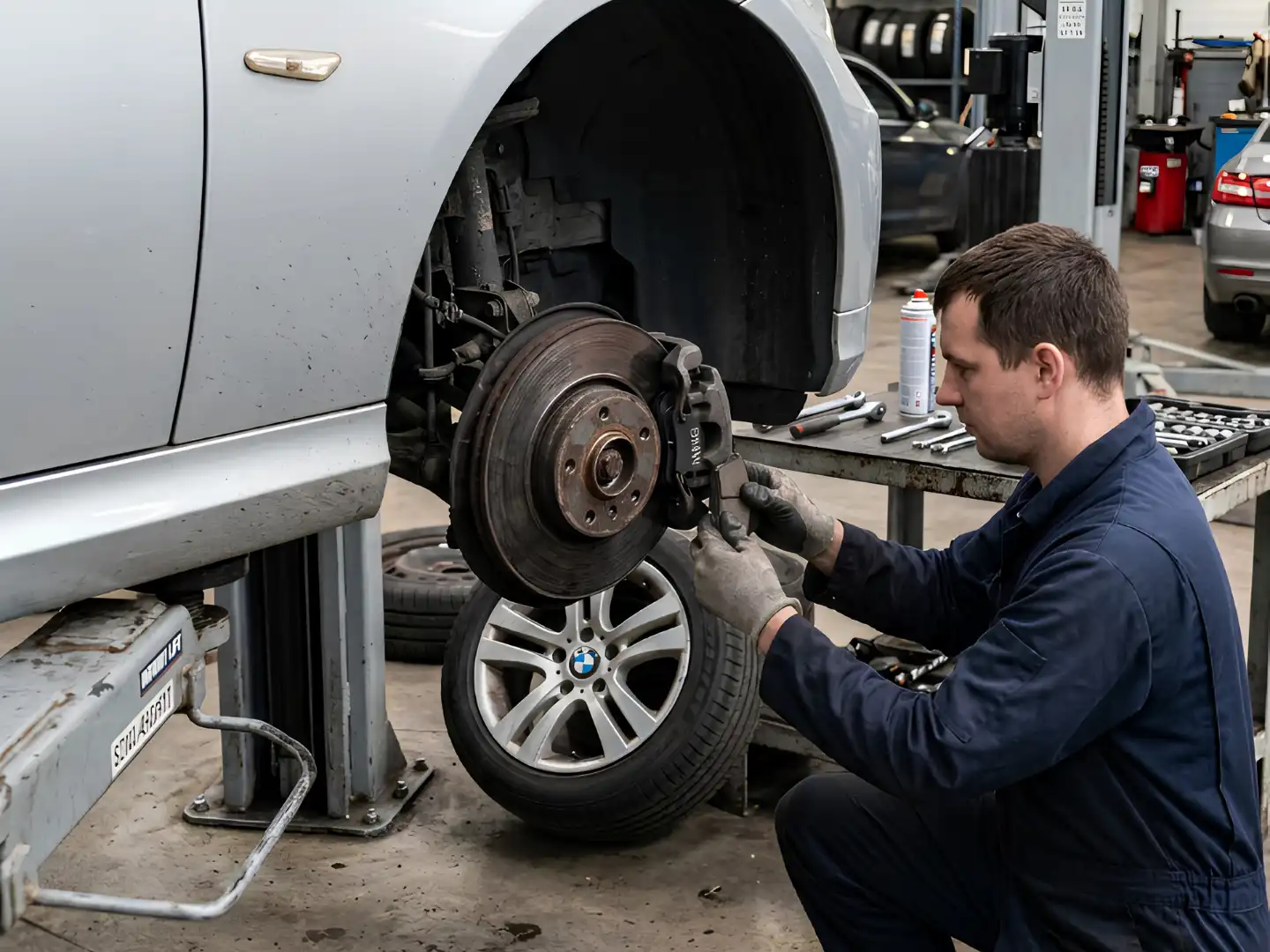 01
01Worn pads are taken out, caliper pistons pushed back with model-matched electronic tools, and fresh lining fitted with new wear sensors before a controlled bedding cycle locks everything in.
Worn or heat-damaged discs are swapped for OE-grade cast iron or carbon-ceramic units that match your model. The manufacturer designs its rotors to wear alongside the pads rather than outlast them.
Failed pump motors, stuck valve bodies, and worn wheel-speed sensors are rebuilt or replaced at the component level. This brings back full anti-lock control along with traction and stability functions.
Old fluid is pushed out under pressure from every line, including the ABS unit. Fresh DOT 4 low-viscosity fluid that meets the factory boiling-point rating is then fed through the entire system.
Slide pins are pulled apart, cleaned, and coated with heat-rated silicone grease. Piston seals are checked for cracks, and you can add a ceramic colour finish for extra protection against rust.
A vacuum decay test checks whether the booster diaphragm and check valve still work properly. This test shows if the hard pedal feel comes from the booster itself or from a vacuum supply fault upstream.
Single-use wear sensors on both axles are replaced during every lining change. This restores the CBS alert system that tells you when material is running low on any corner of the car.
The rear electronic parking unit is released through a software routine before any parts come out. After the new lining goes in, the actuator is reset through the same interface to restore full clamping force.
Choosing the right compound affects pedal feel, dust output, noise, and rotor life. Each type suits a different driving style.
Ceramic pads run quietly, leave very little dark dust on wheels, and hold a steady grip across a wide heat range. They are a strong choice for daily commuters who value a clean, quiet ride.
Semi-metallic pads contain 30 to 65 percent metal fibres like steel, copper, and iron. They shed heat faster than ceramic and work well for drivers who tow, haul heavy loads, or drive on hilly roads often.
Organic (NAO) pads are made from aramid fibre, glass, and rubber bonded with resin. They offer a soft initial bite and low noise at a lower cost, but they wear faster and handle high heat less effectively.
Performance and M-compound pads are built for hard stopping on M2, M3, M4, M5, and X5 M models. Their friction mix is tuned to the oversized or carbon-ceramic rotors on M cars and stays stable above 400 degrees Celsius on the track.
Our team will suggest the compound that fits your driving habits, weekly mileage, and model setup.
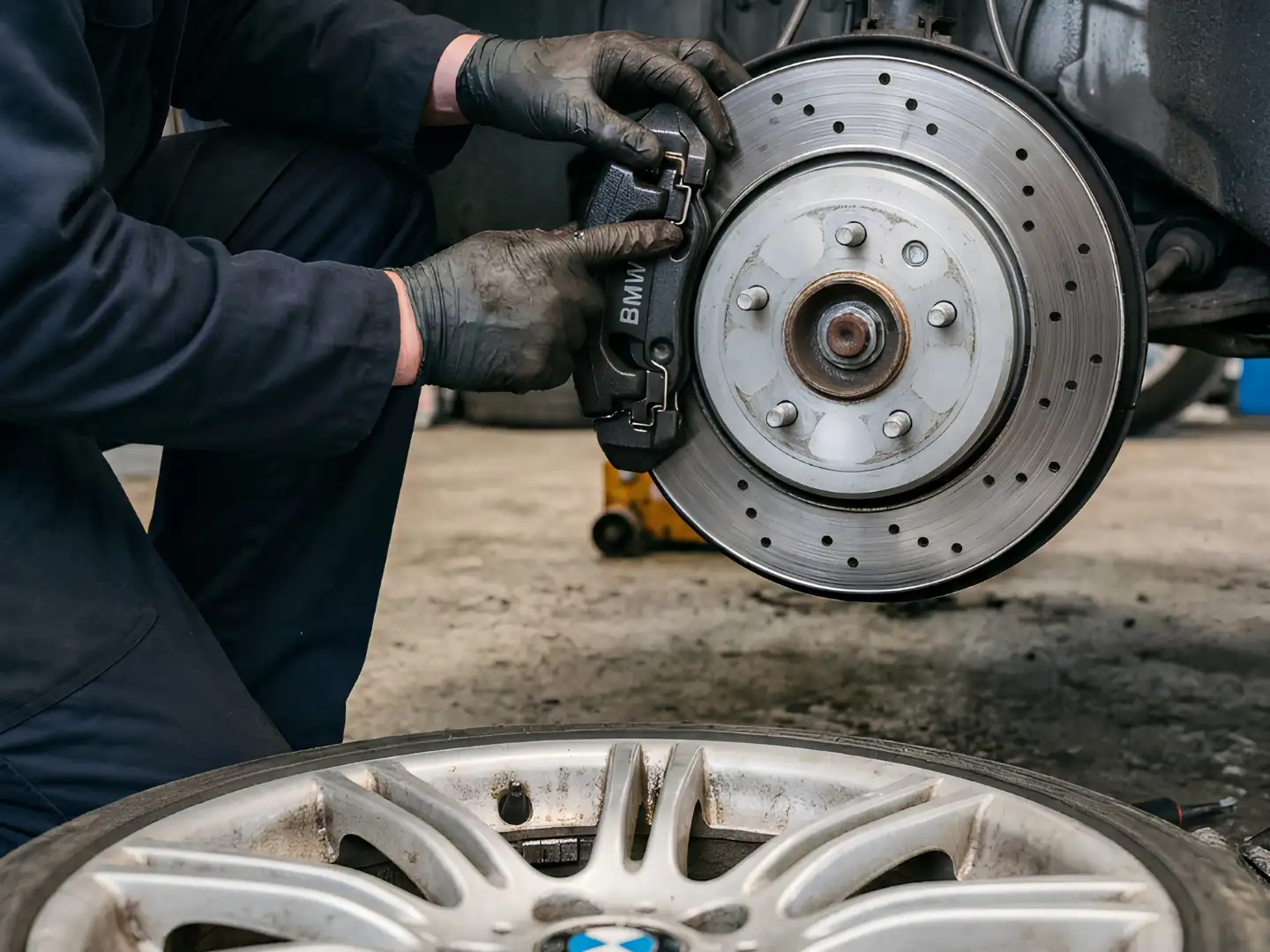
A technician drives the car at a range of speeds and notes pedal travel, stopping balance, and any unusual sounds or feelings before the vehicle goes on the lift.
Digital callipers measure the remaining lining thickness on all eight surfaces to 0.1 mm accuracy. A micrometer and dial gauge then check rotor thickness and runout on each disc.
A moisture tester reads the water content in the brake fluid. This reveals whether the fluid’s boiling point has dropped below the safe level for high-heat braking conditions.
Stored and pending codes from every brake-related control unit, including stability control, traction management, and wear-sensor loops, are pulled and compared to find the root cause.
You receive a clear summary with exact measurements, close-up photos of every part, and a ranked list that separates urgent work from items that can wait and be monitored.
800 Sayara has served BMW owners for over ten years. The team holds advanced training in both mechanical and electronic systems across F-series, G-series, and i-model platforms.
Book a brake appointment from anywhere in Abu Dhabi, whether Mussafah, Khalifa City, Al Reem Island, or Yas Island. We pick up your car, finish the job, and bring it back at no added cost.
Every part, from linings to rotors, sensors, and fluid, comes from the same tier-one makers that supply the factory line. These include Textar, ATE, Brembo, and Zimmermann.
Our workshop runs ISTA+ and ISTA/P, the same platforms found at authorised dealer centres. These tools handle fault reading, coding, and module-level setup for every BMW system.
Dedicated lift bays, pressure-bleed stations, torque-set tooling, and climate-controlled parts storage let us install every part under controlled, professional conditions at our workshop.
Every quote splits parts cost from labour, lists OE part numbers you can verify, and includes a written warranty on quality. There are no hidden charges added after the work is done.
Following distance
Keep at least a three-second gap in traffic so you can slow down gently instead of stopping hard. This cuts heat stress on the linings and rotors over time.
Coasting before braking
Lift off the throttle early and let the engine slow the car before you touch the pedal. This sends less energy through the friction surfaces at each stop.
Pedal discipline
Do not rest your foot on the pedal while cruising. Even light contact creates a constant drag that heats the lining and speeds wear for no reason.
Fluid schedule
Book a full fluid renewal at 800 Sayara every two years no matter how many kilometres you drive. Moisture enters the system over time and quietly lowers the fluid’s boiling point well before you notice any change.
Routine visual checks
Have the linings and rotors looked at during every BMW oil change visit. Catching early wear at this stage stops it from turning into a more expensive disc or caliper problem.
Suspension alignment
Keep your BMW suspension repair and wheel alignment up to date. Poor alignment causes the pads to press unevenly, which leads to one-sided wear across the axle.
Climate awareness
Park in shaded or covered spots during Abu Dhabi’s peak summer months to bring down rotor temperature before your first drive. A study published in Applied Sciences on disc-pad heat behaviour confirms that thermal breakdown of braking parts speeds up once temperatures pass the design limit, which makes heat control a real priority in this climate.
Get in touch with 800 Sayara to book a free brake check. The team will inspect, measure, and report on every braking part with zero pressure to go ahead. Honest diagnostics, trained technicians, and OE-grade parts keep your car stopping the way its engineers planned.
800 Sayara — Al Hasheemah 4 St, Musaffah Industrial, Abu Dhabi· Mon–Sat 9:00–19:00·Open in Google Maps·+971 52 731 8779
Typical driving time to our workshop from every area we cover (tap a location to open the route):
Times are Google Maps' typical range leaving on a weekday at 11:00 AM; rush hour takes longer. Free pickup and delivery of your car is available across Abu Dhabi.
Still have a question?
Talk to a BMW advisor directly. Free written estimate before any work begins.
+971 52 731 8779 WhatsAppFront pads hit the minimum thickness mark every 30,000 to 50,000 km under normal city driving. Rear pads last about 40,000 to 60,000 km. M-series cars driven hard reach these limits sooner.
Cost depends on the model and compound. A standard ceramic front-axle set with labour, sensors, and a bedding cycle usually falls between AED 600 and 1,800. Rear-axle work costs about 10 to 15 percent less because the rear friction area is smaller.
The manufacturer designs its rotors as matched-wear parts, so disc replacement alongside or within one cycle after the pads is normal practice. A technician measures what is left against the minimum stamped on the hub, and any disc at or near that limit gets replaced.
A front-and-rear lining swap with sensor renewal and fluid flush takes about two to three hours. Adding rotor replacement on one axle brings the total to roughly four hours.
Our workshop stocks both original manufacturer parts and OE-grade alternatives from the same tier-one factories that supply the assembly line. Both types carry the same performance and safety ratings.
Badly worn linings force the caliper piston out past its normal range, which risks seal damage and fluid leaks. A scored rotor throws off metal particles that foul the contact surface and speed up wear on other parts. Waiting too long raises costs across several components.
Regenerative braking on the i4, iX, and plug-in hybrid models cuts pad wear a great deal. Some owners see lining life go past 80,000 km. But low use also lets rotors build up surface rust. Our team checks the friction system and the regenerative setup together to keep both working in sync.
Steady temperatures above 45 degrees Celsius raise the baseline rotor heat before you even touch the pedal. Linings that run closer to their heat ceiling shed material faster, so a set rated for 60,000 km in a cooler climate wears down closer to 40,000 km here.
Most owners pair their assessment with a BMW engine repair check, BMW AC repair review, or a full BMW pre purchase inspection to save time. Our workshop handles multiple systems in one visit so you avoid repeated drop-offs.
 BMW Engine Repair
 BMW Transmission Repair
 BMW AC Repair
 BMW Suspension Repair
 BMW Oil Change
 BMW Electrical Repair
 BMW Pre-Purchase Inspection
 BMW Steering Repair
 BMW Tyre Change
 BMW Exhaust Repair
 BMW Window Tinting
 BMW Body Paint